 Elite Hardwood Floors
Elite Hardwood Floors
Elite Hardwood Floors
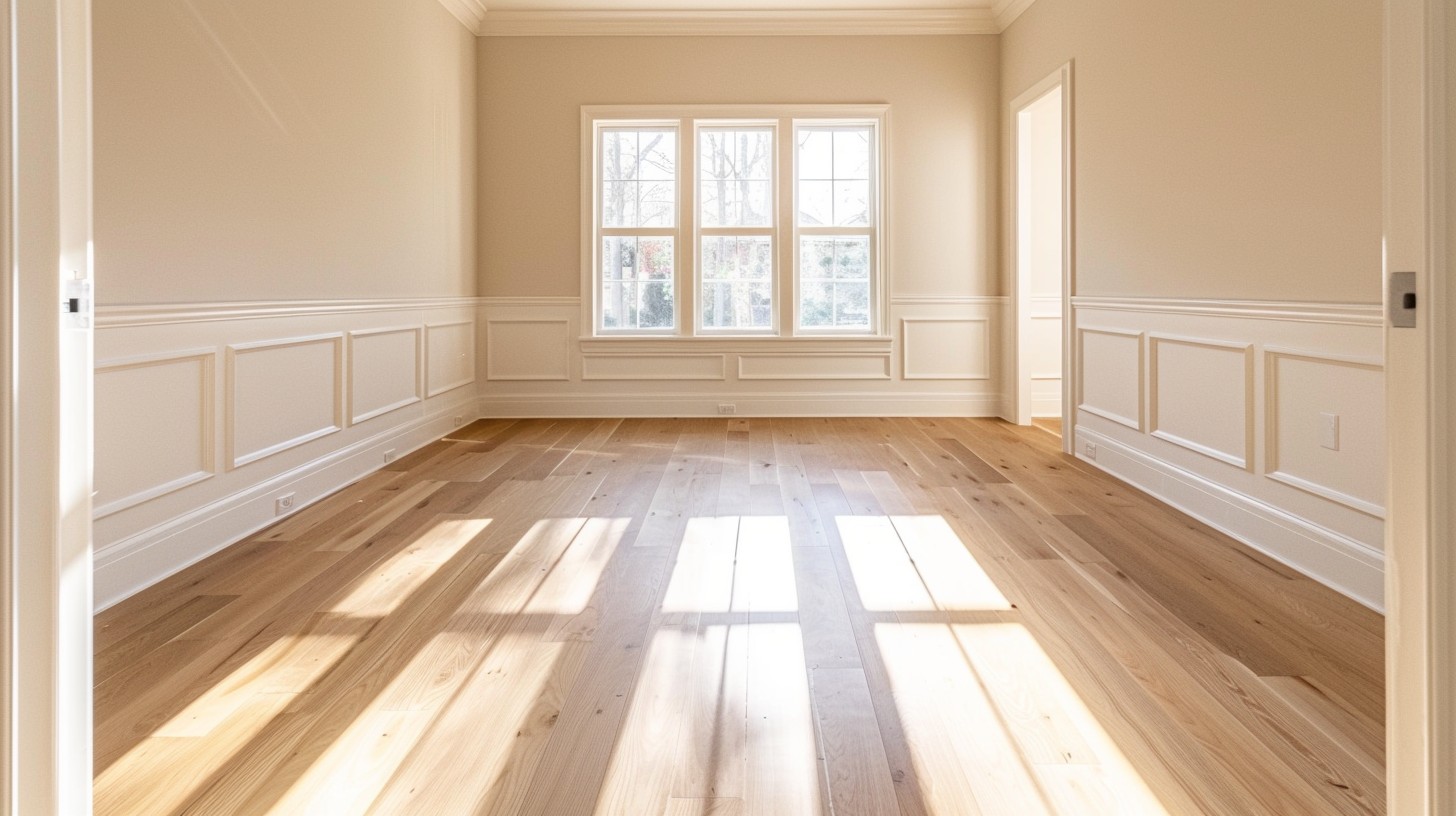
A new hardwood floor is one of the bigger decisions you'll make in a house, and most of what determines whether you're happy with it in ten years happens before the first board goes down. We install solid and engineered hardwood across Marin County, from San Rafael down through Mill Valley, and we do the unglamorous parts properly: checking the subfloor for level and moisture, letting the new wood sit in your house for several days before we install it so it can adjust to your home's humidity, and telling you which product actually suits your place instead of whichever one we happen to have a pallet of. If your existing floor is oak that's just tired, you may not need us to install anything at all. A refinish costs a fraction of a new floor. And if it's really one bad section, a repair usually handles it. We'd rather point you there and be the ones you call in fifteen years.
The difference is simpler than most people expect. Solid hardwood is a single piece of wood all the way through. Engineered hardwood is a layer of that same wood over a core built to hold it flat. Both are real hardwood, both are oak or walnut or hickory on the surface, and once either one is installed and finished you could not tell them apart standing in the room. Which one belongs in your house comes down to what is underneath it.
Solid hardwood is one piece of wood the whole way down, usually three-quarters of an inch. All that thickness is what lets it be sanded and refinished many times over its life, which is why solid floors in Marin houses built in the forties are still down there working. What solid doesn't like is moisture coming from below. It can't go over concrete, and a damp crawl space underneath will move it around on you.
Engineered is that same real wood surface bonded over a plywood or high-density core, and the core is what makes it dimensionally stable. It goes places solid can't: over a slab, over radiant heat, into a lower level. It rides out the humidity swings near the water better than solid does, which is a real advantage across a lot of this county. It's also the stronger choice in wide plank, because a seven-inch solid board has considerably more room to cup than a seven-inch engineered one. The spec that matters is the wear layer, meaning the thickness of the real wood on top. We work in thick wear layers, 4mm and up, and at 6mm a floor refinishes about as many times as solid wood does. That is the engineered wood we would put in your house, and it is built to be sanded and brought back decades from now the same as solid.
We're not going to steer you toward one on principle. We look at your subfloor, take a moisture reading, ask how long you plan on staying in the house, and put samples of both in front of you. Somebody in Sausalito on a slab gets a different answer than somebody in Novato on a raised foundation.
Nobody can hand you a real number over the phone without knowing a few things, but here's what moves it. Square footage matters less than people assume. The wood you pick matters more, because the spread between a common red oak and a wide-plank white oak or walnut is wide, and it's a bigger swing than any labor difference between them.
After the wood, it's the subfloor. If yours is flat, dry, and solid, we're installing. If it has a hump, soft spots, or a moisture reading we don't like, that gets fixed first, and it goes on your estimate as its own line so you can see exactly what you're paying for and why. Stairs cost more than people expect, because every tread and riser gets cut and fit one at a time. Tearing out and hauling off what's there now is its own line as well.
We walk the space, then you get a real written number. If somebody quotes you a firm price without looking at what's under your floor, they're either guessing or they're planning on a change order later.
The first visit is measuring and looking underneath. We check the subfloor for level, take moisture readings on the subfloor and on the wood, and flag anything structural that has to be dealt with before flooring covers it up.
Then the wood sits. This is the step that gets skipped, and it's the one that costs people money. Wood that comes off a truck in the morning and goes down that afternoon is going to shrink or swell once it settles into your home's actual humidity, and you'll see it eight months later as gaps you can catch a fingernail in. Solid needs longer than engineered. We schedule for it instead of hoping.
Install method follows the product and what's under it. Nail-down over a wood subfloor, glue-down over concrete, floating where that's the right call. Then trim, transitions between rooms, and we haul our own mess out. A 1940s bungalow in Fairfax with its original subfloor is a genuinely different job than a newer build in Novato sitting on a slab. We price them differently and we schedule them differently, because they are different jobs.
Two separate things cover a new floor. The manufacturer warranties the product, and every one of them reads differently, so we hand you the actual terms before you buy rather than after. We stand behind our own labor separately from that.
What neither one covers is your house doing something to the floor. An HVAC system that lets indoor humidity run from 25 percent up to 70 and back down, a slab leak, a crawl space nobody has looked at in twenty years. None of that is an installation failure, and no manufacturer is going to pay for it.
So we document. Subfloor condition, moisture readings on the wood and on the slab or subfloor, photos, all of it recorded before we start and all of it in writing. If something goes sideways two years from now, you have a record of what the conditions actually were on day one. That record is worth having whether the conversation ends up being with us, with the manufacturer, or with your insurance company.