 Elite Hardwood Floors
Elite Hardwood Floors
Elite Hardwood Floors
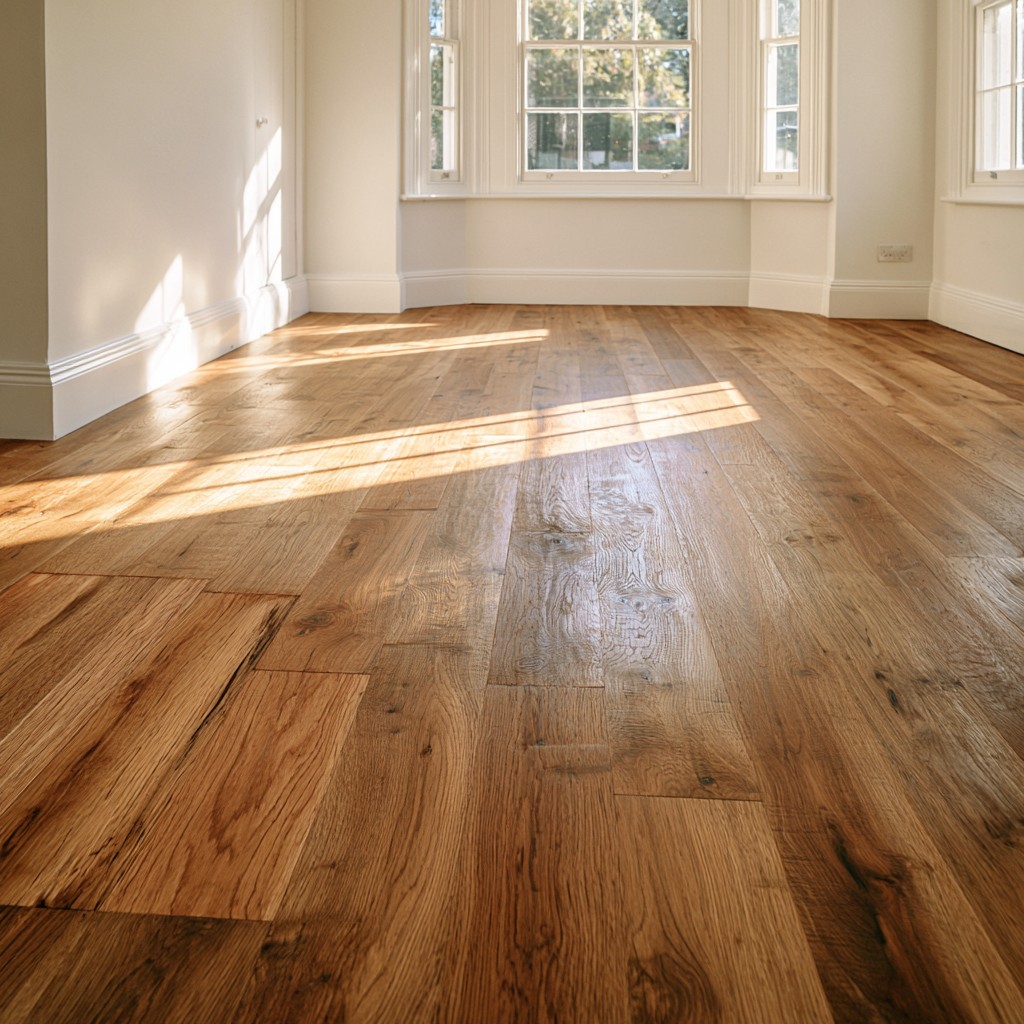
A damaged hardwood floor usually doesn't have to come out. Water damage, dog scratches, squeaks, boards that have started curling up at the edges: most of that gets fixed in place, matched to the wood you already have, and blended in well enough that you'd have to know exactly where to look to find it. We repair hardwood floors for homeowners in Mill Valley, Sausalito, and across the rest of Marin County. The first thing we do is find whatever caused the damage, because fixing the boards without fixing the cause just means doing it again next winter. If the damage has spread across most of a room, the patched boards won't match the color of everything around them, so our refinishing crew sands and finishes the whole room afterward and the floor comes out one consistent color. And when boards are too far gone to patch at all, our installation team lays new flooring into that area and matches it to the wood you already have.
One board that's cracked, gouged, or stained from a single spill is a repair. That's not a reason to redo a room. Squeaks are usually a subfloor fastener that has worked itself loose over the years, and we can often deal with that without touching the finish at all. Minor cupping frequently settles back down on its own once the moisture source is gone and the wood dries out, sometimes with no sanding required.
The line where we'd actually tell you to replace instead of repair is when the damage covers a large connected area, or when the subfloor underneath has been sitting wet long enough to be compromised itself. At that point you're patching something that has already failed.
Pet damage lands in the middle. Shallow claw marks sand and refinish out fine. But if a dog has been working the same spot by the back door for six years, the wood there can be worn thin enough that a patch is the more honest answer. We'll tell you which one you're actually looking at rather than defaulting to whichever job bills higher.
Three words get thrown around for warped hardwood and they mean three different things. Which one you have tells us what went wrong.
Cupping is when the edges of each board sit higher than the middle. Run your hand across the floor and you'll feel a washboard. It happens because the underside of the wood is taking on more moisture than the top, so the bottom swells and pushes the edges up. Usually that's a slow leak, a damp crawl space, or humidity that's been running high for a long stretch.
Crowning is the reverse. The middle of the board rides higher than the edges. Most of the time we find crowning on a floor that was cupped, got sanded flat by somebody in a hurry, and then finished drying out afterward. The wood shrank back down and the high middle is what got left behind.
Buckling is the serious one. Whole sections of floor pull loose from the subfloor and lift. You can spot it from across the room. That's not a slow drip. That's a burst supply line or a dishwasher that ran all night.
We put a moisture meter on the floor before we touch anything, because a cupped floor can read bone dry on top and still be soaked underneath. Sanding a floor that hasn't finished drying is one of the most common jobs we get called back in to fix a second time. The wood keeps moving after somebody flattened it, and three months later you're looking at crowning where the cupping used to be and paying for the whole job over again.
We find the water first. Fixing wood without fixing what soaked it just buys you a year or two before the same repair comes due again. Once the area reads dry, we work out which boards can be saved and which have to come up, then source replacements as close as we can get to your existing species, cut, and finish.
Repaired and replaced sections get refinished into the surrounding floor, feathering the stain out so there's no hard line where the new wood meets the old. On smaller jobs, a single scratch or one water stain, we can often work inside the existing finish and skip the refinish entirely.
Species matters more here than most people expect. Oak has enough grain movement to swallow a seam. Maple is tight and uniform, which looks great until you're trying to hide a patch in it, and those repairs take considerably more care to disappear the way they would on oak.
When a repair follows a burst pipe, an appliance leak, or storm damage, we photograph the affected area and take moisture readings before any work starts. That's the same documentation an adjuster is going to ask for. We're glad to work directly off an adjuster's scope when there is one, and if we find damage running further than what got assessed, we flag it clearly so nothing quietly falls out of a claim you've already filed. If you haven't filed yet and you're not sure the damage is worth it, we'll give you an honest read on the scope and the likely cost before you make that call.